There is something almost strange about the way we talk about lasting marriages.
We talk about compatibility. Shared values. Good communication. Sexual chemistry. Financial stability. We tell people to choose someone kind, trustworthy and emotionally available.
All of that matters.
But none of it quite explains why two people can have all the ingredients of a “good marriage” and still slowly become strangers.
And perhaps that is the more uncomfortable question:
What keeps two people emotionally connected after the excitement has become ordinary?
Because marriage does not usually lose its warmth in one dramatic moment. More often, connection disappears quietly. A conversation becomes a logistical exchange. Affection becomes occasional. One partner stops telling the other about the little things. They still share a home, a surname, children, bills and responsibilities but less and less of themselves.
The psychology of long term love points to something less glamorous than grand romantic gestures:
Lasting love is built less by how intensely two people feel about each other and more by how consistently they make each other feel seen, safe and significant.
That changes the way we should think about marriage.
The marriage problem nobody talks about: becoming familiar without becoming known
At the beginning of a relationship, curiosity comes naturally.
You want to know how they think. What makes them laugh. What scares them. What they dream about. Why that particular song matters to them.
Then marriage happens.
And eventually, familiarity can create the illusion that there is nothing left to discover.
You know what they order. You know how they take their coffee. You know the stories they’ve told a hundred times.
But knowing someone’s routines is not the same as knowing their inner world.
A husband can know that his wife is tired without understanding what kind of tired she is.
A wife can know her husband is quiet without asking what happened inside him that day.
This is where emotional connection can begin to thin out.
Research on relationships repeatedly points toward the importance of perceived partner responsiveness. The sense that your partner understands you, cares about what happens to you and responds to your needs. Studies have associated this sense of responsiveness with relationship satisfaction, including in married couples.
In other words, one of the deepest questions in marriage may not be:
“Do you love me?”
It may be:
“Do I still feel known by you?”

Love lasts when ordinary moments still feel emotionally important
We tend to measure love through events.
Anniversaries. Vacations. Birthdays. Flowers. Proposals. Date nights.
But emotional intimacy is usually built somewhere much less cinematic.
Your partner tells you something good happened at work.
You could say, “Oh, that’s nice.”
Or you could look up from what you’re doing and ask, “Really? What happened?”
Those responses are not emotionally equivalent.
Psychologists sometimes call this process capitalization: how partners respond when one person shares something positive.
Research has found that active, constructive responses to a partner’s good news are associated with better relationship outcomes. In one study of couples, perceived partner responsiveness was linked with greater closeness; more recent research has similarly found benefits when partners respond enthusiastically and supportively to each other’s positive experiences.
This matters because intimacy is not built only when your spouse is hurting.
You also become emotionally close by caring about what makes them happy.
The promotion.
The funny thing their colleague said.
The idea they’ve been quietly developing.
The meal they are proud of making.
The book they can’t stop talking about.
A marriage can survive without constant excitement. But it becomes difficult to sustain emotional closeness when one person’s inner life repeatedly receives a shrug.
You don’t need to agree on everything. You need to remain on the same side.
Another misconception about lasting marriage is that happy couples must be unusually compatible.
But long term research on couples complicates that idea.
John Gottman and Robert Levenson’s research found that many marital problems (around 69% in the research they report) are perpetual rather than fully solvable. These often involve enduring differences in personality, preferences or ways of approaching life.
That means a successful marriage is not necessarily one in which every disagreement eventually disappears.
Sometimes the same argument keeps coming back.
One person wants more structure. The other wants spontaneity.
One spends easily. The other saves carefully.
One wants to talk immediately. The other needs time.
The question becomes less “How do we finally eliminate this difference?” and more:
“Can we disagree without turning each other into the enemy?”
That distinction is enormous.
A disagreement says, “We see this differently.”
Contempt says, “There is something wrong with you for seeing it differently.”
And that second message is far more corrosive.
Gottman’s research identifies criticism, contempt, defensiveness and stonewalling as destructive interaction patterns associated with marital instability.
A marriage does not become fragile because two people occasionally get angry.
Sometimes anger is simply evidence that something matters.
What damages connection is what happens when anger becomes humiliation, contempt, character assassination or emotional withdrawal.
The goal of a healthy marriage is not to eliminate conflict. It is to stop conflict from becoming a referendum on each other’s worth.
The smallest moments may matter more than the biggest ones
There is a reason a marriage can look perfectly intact from the outside while feeling lonely on the inside.
The major events are still there.
But the small moments have disappeared.
The kiss before leaving for work.
The hand on the back while passing in the kitchen.
The “How did that meeting go?”
The joke only the two of you understand.
The instinct to send a message because something reminded you of them.
These moments can look insignificant individually. Together, they create the emotional atmosphere of a marriage.
Gottman’s research emphasizes these everyday “bids” for connection. Small attempts to get attention, affection or engagement from a partner. Turning toward those bids helps build emotional trust.
This is perhaps one of the least romantic sounding truths about romantic love:
A lasting marriage is often maintained through hundreds of tiny acknowledgements that neither person would think to put in a wedding speech.
Love is not only what happens when life is beautiful.
It is also how you treat each other when nothing particularly interesting is happening.
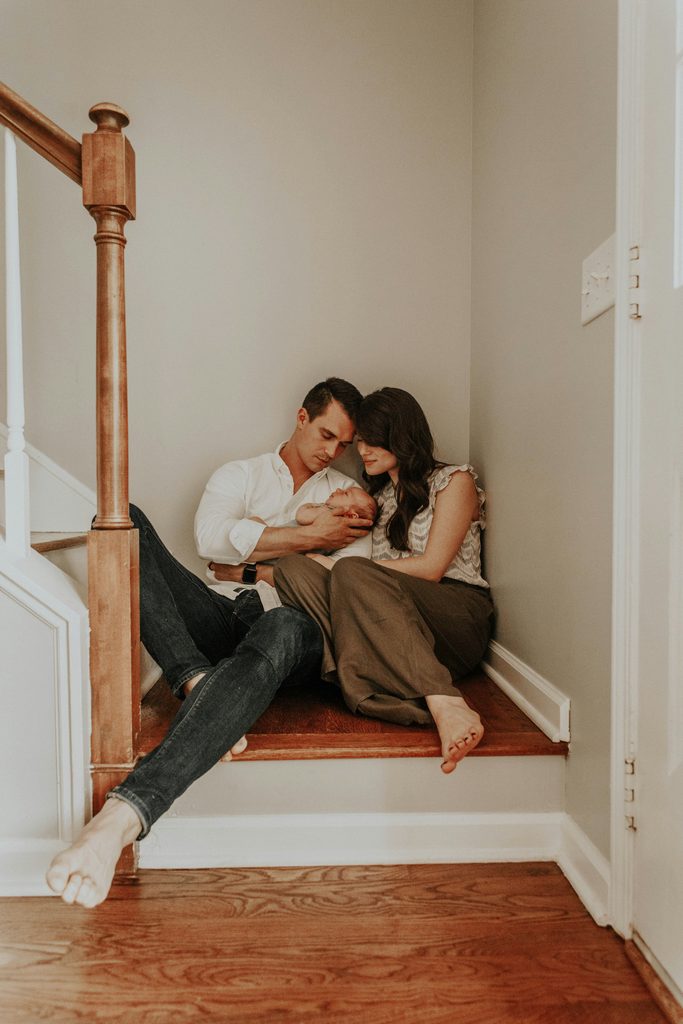
And then there is the difficult part: people change
The person you married at 28 may not be the person standing beside you at 48.
Neither are you.
People change through parenthood, grief, career shifts, financial pressure, illness, success, disappointment, ageing and experiences they never anticipated.
So perhaps one of the greatest threats to a long marriage is not change itself.
It is assuming the person you married has already been fully figured out.
Long term love requires a strange combination of familiarity and curiosity.
I know you, but also: tell me who you are becoming.
That may be one reason older long term marriages can look different from younger ones. Research examining long term marriages has found that older couples can experience less conflict and more potential for pleasure in certain areas compared with middle aged couples.
Time does not automatically deepen love.
But time gives two people thousands of opportunities to keep learning each other.
What actually makes love last?
Perhaps the answer is less mysterious than we make it.
Not perpetual butterflies. Not perfect compatibility.
Not never fighting. Not doing everything together.
And certainly not simply staying married.
Love lasts when two people continue participating in each other’s emotional lives.
They notice.
They respond.
They repair.
They remain curious.
They allow each other to change.
They can disagree without degrading one another.
They celebrate each other’s happiness instead of treating it as competition or background noise.
And when they hurt each other, as imperfect people inevitably will, they understand that being right is not always the same thing as protecting the relationship.
Research on marriage gives us useful patterns, but no study can manufacture tenderness between two people. Science can tell us that responsiveness, positive interaction and destructive conflict patterns matter. It cannot make someone genuinely care.
That part remains deeply human.
Because perhaps the real secret to a lasting marriage is not finding someone you can love forever.
It is finding and becoming the kind of person who keeps asking:
“Who are you now, and how can I meet you there?”
After years together, love is no longer sustained by discovering someone new. It is sustained by refusing to stop discovering the person you already know.
Sources
- John Gottman & Robert Levenson, research on marital interaction and long-term stability.
- Research on perceived partner responsiveness and couple satisfaction.
- Research on capitalization: how partners respond to each other’s positive experiences.
- The Gottman Institute’s summary of research on destructive conflict patterns and relationship stability.